
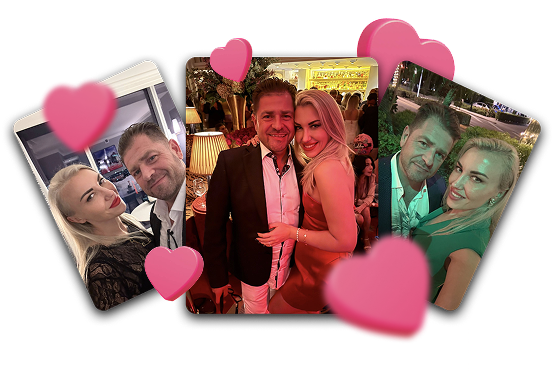
THE LOVE THING CHANGED OUR LIFE AND NOW WE WANT TO SHARE IT WITH THE WORLD
A simple, gentle way to grow connection—by journaling moments that matter. Join Alex & Valeriya and start your shared journal today.
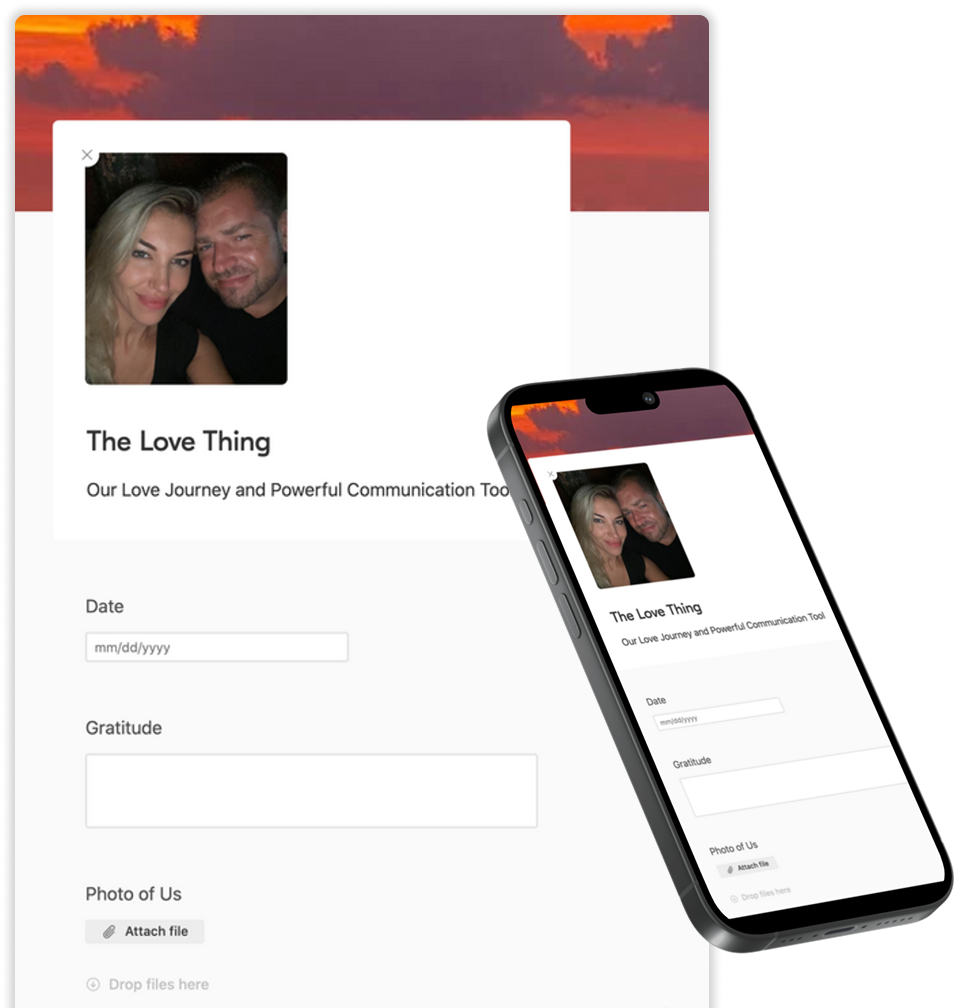
FILL OUT THE FORM BELOW
Keep all your Journal Entries in one place
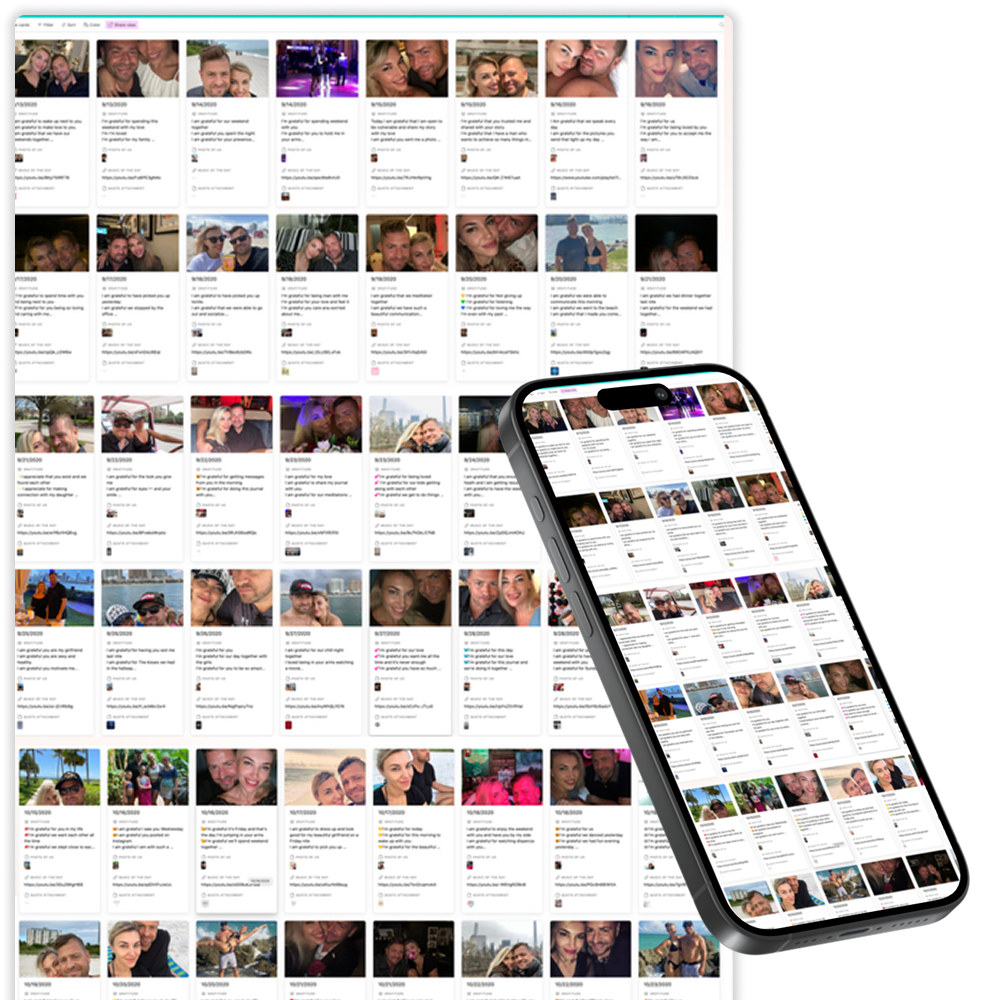
How to enter your Journal Entries
🌹 Our Love Story: From a Message to a Movement
Six years ago, fate found its way into our lives through something as simple as a Facebook post. Alex saw my picture on my sister’s page — a small moment that changed everything. He sent me a message that wasn’t polished or rehearsed, just real.
He told me he was going through a divorce, that he had two children, and that he wasn’t looking for games — just an honest connection over a cup of tea. There was something deeply authentic in his words, so I took a chance.
When we met, he showed up with flowers and opened the door for me like a true gentleman. He took me to a beautiful restaurant overlooking the ocean, where the sound of the waves seemed to echo our laughter. We talked for hours, lost in the moment, not wanting the evening to end.
But life still had its rhythms — work, responsibilities, and distance. I lived with my daughter, and Alex often traveled for business. We kept in touch with texts, pictures, and FaceTime calls, but after a while, it all began to feel repetitive. We missed feeling each other — not just hearing or seeing.
That’s when we created our “Love Thing.” 💞

It wasn’t just a game or a chat — it was our private space to connect more deeply. A place to share our most vulnerable thoughts, our daily gratitude, our passions, our fears. It became our emotional home, a sacred space where honesty wasn’t just encouraged — it was celebrated.
Through our Love Thing, we learned how to communicate with compassion instead of judgment, to turn conflict into connection, and to keep falling in love with each other over and over again.
It transformed our relationship — and our lives.
Today, our bond feels stronger, more intentional, and more romantic than ever. We’ve learned that love isn’t just about attraction — it’s about attention. It’s about choosing each other, every single day, even when life gets messy.
And now, we want to share that magic with the world — to help other couples build the same kind of love: raw, real, and unstoppable. ❤️
what others are saying

START JOURNALING YOUR LOVE TODAY
It takes less than a minute to join
The Love Thing © 2025 All Right Reserved